


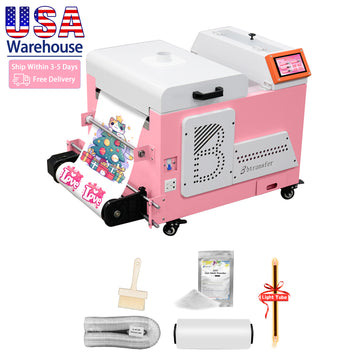

In recent years, the personalized product market has continued to grow.
From birthday gifts and wedding keepsakes to corporate branded gifts, more and more consumers hope to purchase products that can express personal style or emotional value. As a category that is frequently used in daily life, drinkware has also become an important direction for personalization.
Compared with traditional product sales, the advantages of using the MU 1730 UV DTF printer to customize drinkware are that there is no need to keep a large amount of inventory, products can be flexibly adjusted according to customer needs, and it is suitable for starting from a home studio or a small business project.
Next, this article will take you step by step through how to gradually build your own business through design capabilities, a stable production process, and suitable sales channels.
What Should You Prepare Before Starting a Business?
Identify Your Target Customers
Different customers have different needs when buying custom drinkware. Understanding your customer groups can help you design more valuable products.
Individual Consumers: Holiday gifts, birthday keepsakes, couple souvenirs, pet-themed products, personalized daily items. The value of the product comes not only from the cup itself, but also from the unique design and personal meaning.
Schools, Clubs, and Organizations: School logo custom cups, school team exclusive water bottles, club merchandise, event commemorative cups. Orders like these usually have a clear theme and bulk demand, and may also become a stable source of cooperation.
Corporate Clients: Company logo cups, employee welfare gifts, brand promotional products, event souvenirs. Corporate customization focuses more on brand display and long-term cooperation.
Prepare the Materials
To make a personalized drinkware product, you need to be prepared with the following:
Basic Materials: Blank mugs, UV DTF transfers, and packaging materials.
Equipment and Tools: UV DTF printer, UV ink, UV DTF A/B film, RIP software, and design software.
At the same time, establish a complete production process:
Design → Printing → Transfer → Inspection → Packaging → Shipping

Cost of Producing One Custom Drinkware Item
Before starting a business, it is very important to understand the costs and upfront investment. Taking a basic custom mug business as an example:
One mug: approximately $2–$5
Packaging materials: approximately $0.5–$1
Labor cost: calculated based on the complexity of the design, order quantity, and production time.
The material cost of making one basic custom drinkware item is usually only a few dollars.
Upfront Equipment Investment
To make transfer stickers, the printer is the core piece of equipment and is also an important investment for starting a business.
UV DTF printer and related printing materials: approximately $3,500–6,000
The specific investment depends on the printer model, production needs, printing scale, and the choice of supporting consumables.
When you see this figure, you may feel that the upfront investment is not low. But for a custom product business, the equipment is not simply a one-time expense. It is a production tool that helps you keep creating products over time.
A simple calculation shows that: the material cost of one custom drinkware item is approximately $3–$6.5, while the market selling price is usually $15–$25. Based on a selling price of $20 and a material cost of $5, for each cup sold, the theoretical gross profit is approximately $15. As orders gradually become more stable, the equipment investment can be gradually recovered through continuous sales.
More importantly, what you are purchasing is not just the ability to make cups, but a production method that can continuously create personalized products.
How to Use a UV DTF Printer to Make Custom Cups?
Traditional cup customization methods may be limited by materials, equipment, or production processes. UV DTF technology provides a more flexible method: by printing high-definition color designs and making transfer stickers, the designs can be applied to a variety of hard surfaces, such as mugs, insulated cups, glass cups, gift boxes, phone cases, acrylic products, metal products, and more. This allows you to start with cups while also exploring more opportunities for personalized products.
Step 1: Choose the Cup Type and Design Direction
First, determine the product type: mugs, insulated cups, coffee cups, or corporate gift cups. Then, design the content according to customer needs: names, logos, illustrations, pet photos, holiday elements, and personalized text.
Step 2: Create Your Design
The design can be developed around different usage scenarios. For example:
Admission Commemorative Cup: “Congratulations on your admission to [School Name]!”
Graduation Commemorative Cup: “Class of 2026”
Interest-Themed Cup: Personalized elements related to sports, music, movies, TV shows, and more.
A good design does not necessarily need to be very complicated. The key is to create a connection between the product and the consumer.
Step 3: Print the UV DTF Transfer
After you have selected the design pattern:
1.Upload the design file to the printing software;
2.Adjust the size and position;
3.Arrange the print content;
4.Complete the printing.
If you need to make multiple different designs, you can arrange the layout in advance to improve efficiency.
Step 4: Complete the Transfer
After the sticker has been printed:
1.Clean the surface of the cup;
2.Make sure the surface is dry;
3.Determine the position of the design;
4.Apply the UV DTF design;
5.Check the final result.
Using the MU 1730 UV DTF printer helps you easily complete the above operating process.
How to Sell Your Custom Drinkware Products?
Making products is only the first step. Finding the right sales channels is what turns your creative ideas into orders.
1. Social Media: Showcase Your Creative Process
For personalized products, visual presentation is very important. Consumers are usually not looking for “a cup.” Instead, they become interested after seeing the design process and the final finished product.
You can use platforms such as Instagram, TikTok, Facebook, and Pinterest to showcase your production process, design inspiration, product application scenarios, and customer cases.
The process of turning an ordinary cup into a personalized product is itself content that can attract customers.

2. E-commerce Platforms: Build Online Sales Channels
Once you have stable products, you can sell them through platforms such as Shopify, Etsy, and Amazon Handmade. In addition to displaying the final product results, the product page should also explain the usage scenarios, personalization options, product features, and customization process.
What consumers are buying is not just a “Custom Mug,” but a “Personalized Product.”
3. Local Market: Build Real Customer Relationships
For people who are just starting a business, the local market is often an effective way to gain their first group of customers.
You can contact schools, sports teams, businesses, event organizers, coffee shops, and community events.
Providing customization solutions based on specific needs makes it easier to establish cooperation than simply selling products.
How to Continue Growing Your Personalized Product Business?
Once you have calculated the costs and determined the market selling price of custom drinkware, the next key question is: how can you truly get this business started and grow it step by step?
In fact, the greatest value of custom products lies in meeting consumers’ need for a “sense of exclusivity.”
Customers are not just buying a cup, but a product that matches their identity, interests, or usage scenarios. For example, pet lovers may want a cup printed with an image of their own pet, team members may need customized products that represent their collective identity, and businesses may need gifts that reflect their brand image.
These needs are exactly the starting point of your business.
As your orders gradually become more stable, you can increase the average order value through product bundles, such as “cup + gift box,” “cup + matching accessories,” or “holiday-themed sets.”
By reasonably controlling costs, optimizing product design, and establishing stable sales channels, custom drinkware can absolutely grow step by step from a simple creative project into a sustainably operated personalized product business.
So, how exactly should you do it? The following four steps can help you move forward steadily.
Test the market, find a direction that suits you.
First, choose a direction, such as wedding themes, corporate gifts, campus merchandise, or holiday exclusives.
Test the market through a small number of products, and understand what customers truly like.
Expand Product Series
After finding a stable direction, you can gradually add product types: custom mugs → coffee cups → phone cases → gift packaging → more hard-surface custom products.
UV DTF technology allows you to use a similar process to explore more product opportunities.
Optimize Production Process
As orders increase, you need to focus on how to improve production efficiency, maintain product quality, and reduce repetitive operations. A digital printing workflow can help you batch process designs, optimize production steps, and improve overall efficiency.
Turn Your Creativity into Real Products
The value of custom drinkware is not just a daily item. It can represent a person's interest, a team's identity, a brand's story, and a special experience.
UV DTF technology helps you turn designs from the screen into real products, allowing more ideas to be seen and used.
Whether you start from a home studio or plan to build your own personalized product brand, a good design, a stable production process, and a direction of continuous exploration are all important foundations for moving toward success.
An ordinary cup can also become the beginning of a special story.


