


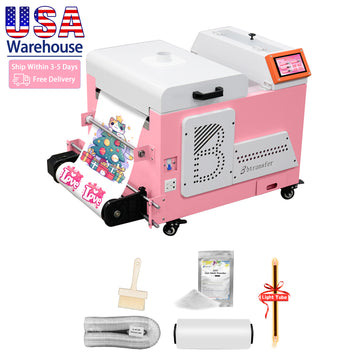

Occasionally, customers ask us: "Can the M1630 Pro DTF printer also function as a UV printer?"
The short answer is no — and here's why.
What Is a UV Printer?
A standard UV printer is a device that prints directly onto the surface of rigid materials such as acrylic, metal, glass, wood, and other hard substrates. The ink is cured instantly by UV light as it is printed, allowing for sharp, durable images on non-porous surfaces.
Why Can't a DTF Printer Be Used for UV Printing?
DTF (Direct to Film) printers and UV printers are built on completely different technologies. There are three core reasons why a DTF printer cannot double as a UV printer:
| Reason | Explanation |
|---|---|
| Ink Systems Are Completely Different | DTF printers use water-based pigment inks, while UV printers use UV inks (oil-based). UV inks are formulated to cure only when exposed to ultraviolet light — and DTF printers simply don't have UV curing lamps. |
| Print Bed/Platform Differences | UV printers are typically flatbed machines, designed to hold heavy, rigid materials in place during printing. DTF printers, on the other hand, are roll-to-roll systems that can only handle soft, flexible film materials. |
| Printhead & Ink Delivery Incompatibility | Different inks have different viscosities and chemical properties. The printheads, dampers, and tubing in a DTF printer are designed specifically for water-based inks. Using UV ink in a DTF printer would damage these components beyond repair. |
In short: A DTF printer has no UV curing lamp, cannot run UV ink, and cannot print on rigid materials — so it simply cannot function as a UV printer.
And What About UVDTF Printing?
Some customers also ask: "Can the M1630 Pro DTF printer be used for UVDTF printing?"
Again, the answer is no.
What Is UVDTF?
UVDTF is a process where a UV printer prints a design onto a special A-film, and then the printed design is cold-transferred onto curved objects like cups, phone cases, and other irregular surfaces using a B-film (transfer film).
Why Can't a DTF Printer Be Used for UVDTF?
| Reason | Explanation |
|---|---|
| Different Inks | DTF uses water-based inks, while UVDTF requires UV inks. |
| Different Curing Methods | DTF relies on heat pressing to transfer the image; UVDTF uses UV light to instantly cure the ink during printing. |
| Different Consumables | DTF uses PET film + hot-melt adhesive powder. UVDTF uses A-film and B-film — no hot-melt powder is needed. |
| Different Machine Structures | UVDTF requires UV curing lamps and a specialized film handling/lamination system — neither of which are present on a DTF printer. |
Final Takeaway
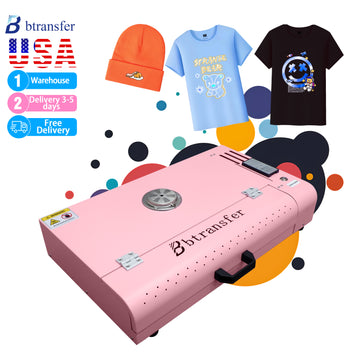
The M1630 Pro DTF printer is a specialized machine designed for printing on textiles (like T-shirts, hoodies, and tote bags) via the DTF transfer process. It is not a UV printer, nor is it suitable for UVDTF applications.
If you're looking to T-shirt printing, the M1630 Pro DTF is the right choice.
If your goal is to print on rigid materials (flat surfaces like acrylic, metal, or glass), you'll need a UV flatbed printer.
And if you're planning to decorate curved items like cups and phone cases, you'll need a dedicated UVDTF setup.


